Skip to content
Menu

Dossier 03 of 08 · Practice case

Term charters carry the hull
through the rate trough.

With the LNG orderbook at 44% of the fleet and spot rates down by half, capital stacks must match contracted hire to senior debt service.

ContinueSchematic LNG carrier capital stack against repriced charter rates (US$43,800/day TC to US$24,600/day spot, Clarksons 2024 to 2025).

Situation and market reset

A record orderbook repriced LNG carrier earnings by more than half.

Newbuilds equal to 44% of the existing fleet are delivering ahead of delayed liquefaction start-ups. South Korea holds roughly two-thirds of that orderbook while yard prices stay above US$200 million.

Practice case

A practice case: an illustrative structure built from public data, not a client engagement.

US$43,800/day

One-year time-charter rate, two-stroke 174,000 cbm LNG carrier, Nov 2024 (down 57% year-on-year)

Clarksons Research via Lloyd's List, 2024

US$43,800/dayOne-year time-charter rate, two-stroke 174,000 cbm LNG carrier, Nov 2024 (down 57% year-on-year).Source: Clarksons Research via Lloyd's List, 2024. Open the publication ↗
US$24,600/day

Average H1 2025 spot rate, 174,000 cbm two-stroke carrier (down 56% year-on-year)

Clarksons Research, 2025

US$24,600/dayAverage H1 2025 spot rate, 174,000 cbm two-stroke carrier (down 56% year-on-year).Source: Clarksons Research, 2025. Open the publication ↗
44% of fleet

LNG carrier orderbook as a share of the existing fleet, the largest in shipping

Clarksons Research, 2025

44% of fleetLNG carrier orderbook as a share of the existing fleet, the largest in shipping.Source: Clarksons Research, 2025. Open the publication ↗
US$200 to 220m

2025 newbuild price for a conventional 174,000 cbm LNG carrier (down about 4% year-on-year)

Clarksons Research / Ship & Bunker, 2025

US$200 to 220m2025 newbuild price for a conventional 174,000 cbm LNG carrier (down about 4% year-on-year).Source: Clarksons Research / Ship & Bunker, 2025. Open the publication ↗

Rate volatility evidence

Term charters de-risk cashflow; spot exposure amplifies the cycle.

Sharp earnings resets hit both gas carriers and dry bulk. Matching charter tenor to senior debt amortisation is the first structuring decision.

174,000 cbm LNG carrier earnings repricing

USD per day · sourced vs back-calculated illustrative

Swipe chart horizontally →

1-yr TC Nov 2023 (implied, illustrative)~US$102k1-yr TC Nov 2024 (sourced)US$43,800Spot H1 2024 avg (implied, illustrative)~US$55.9kSpot H1 2025 avg (sourced)US$24,6001-yr TC DFDE low H1 2025 (sourced)~US$9,000
Clarksons Research / Lloyd's List (2024 to 2025). Prior-year points back-calculated from stated YoY declines (illustrative).US$43,800/dayOne-year time-charter rate, two-stroke 174,000 cbm LNG carrier, Nov 2024 (down 57% year-on-year).Source: Clarksons Research via Lloyd's List, 2024. Open the publication ↗US$24,600/dayAverage H1 2025 spot rate, 174,000 cbm two-stroke carrier (down 56% year-on-year).Source: Clarksons Research, 2025. Open the publication ↗~US$9,000/dayOne-year time-charter low for older DFDE LNG carrier tonnage in H1 2025.Source: Clarksons Research, 2025. Open the publication ↗

Dry-bulk comparator: Baltic Capesize 5TC swing

USD per day · two published points in Q4 2024

Swipe chart horizontally →

~US$26,000US$9,244Mid-Oct 2024Week 51, Dec 2024Straight path betweentwo published values
Baltic Exchange Weekly Bulk Report, week 51 (2024).US$26,000 to US$9,244/dayBaltic Capesize 5TC closing average swing from mid-October 2024 to week 51 of December 2024.Source: Baltic Exchange Weekly Bulk Report, 2024. Open the publication ↗

SPV and capital stack

Five structural steps lock charter hire to vessel debt service.

Scroll down to see how shipyard pricing, charter counterparty, senior bank or ECA tranches, mezzanine capital and emissions covenants assemble into one shipping SPV.

LNG VESSEL SPV STRUCTURESCHEMATIC CAPITAL & CHARTER FLOW

Swipe diagram horizontally →

01 · SHIPYARD ASSET174,000 cbm two-stroke newbuildUS$200 to 220m (Korea / China)02 · CONTRACTED HIRELong-term time charterAssigned directly to SPV account03 · SENIOR TRANCHE (BANK / EXPORT CREDIT AGENCY)50 to 60% LTV (illustrative) · hull mortgage & hire assignment04A · MEZZANINE TRANCHESized to residual funding gap (illus.)04B · SPONSOR EQUITYFirst-loss balance (illus.)05 · EARNINGS WATERFALL & IMO COMPLIANCEOpex → Senior debt → Compliance reserve → Mezzanine → Equity

Schematic SPV structure. Tranche shares are illustrative market conventions calibrated per vessel and charterer.

Step 01 of 05 · Shipyard pricing

Anchor asset cost to Korean and Chinese yard benchmarks

A conventional 174,000 cbm LNG carrier costs roughly US$215 to 220 million at Korean yards and US$200 to 210 million in China in 2025, down some 4% year-on-year. US$200 to 220m2025 newbuild price for a conventional 174,000 cbm LNG carrier (down about 4% year-on-year).Source: Clarksons Research / Ship & Bunker, 2025. Open the publication ↗US$215-220m vs US$200-210m2025 newbuild price for a 174,000 cbm LNG carrier at Korean yards versus Chinese yards.Source: Clarksons Research / Ship & Bunker, 2025. Open the publication ↗~two-thirdsSouth Korea's share of the global LNG carrier newbuild orderbook.Source: Clarksons Research, 2025. Open the publication ↗

Documents: shipbuilding contract, refund guarantee and yard milestone schedule
Step 02 of 05 · Charter party

Source and negotiate term employment before financing close

Magna sources and negotiates the long-term time charter first so contracted hire underwrites the debt profile rather than exposing the SPV to US$24,600/day spot troughs. US$24,600/dayAverage H1 2025 spot rate, 174,000 cbm two-stroke carrier (down 56% year-on-year).Source: Clarksons Research, 2025. Open the publication ↗

Documents: time-charter party, quiet enjoyment letter and hire assignment
Step 03 of 05 · Senior layer

Size senior bank or ECA debt to contracted cashflow

Senior commercial bank or export-credit-agency tranches typically sit at an illustrative 50 to 60% loan-to-value, secured by a first-priority vessel mortgage and direct assignment of charter hire.

Documents: senior loan agreement, hull mortgage and ECA cover policy
Step 04 of 05 · Subordinated layers

Bridge the residual gap with mezzanine and sponsor equity

A mezzanine tranche is sized to the residual gap between senior debt and sponsor equity. Coupons and tranche splits are deal-specific illustrative assumptions; Magna does not quote unsourced coupons.

Documents: intercreditor deed, subordinated facility and equity commitment
Step 05 of 05 · Compliance covenant

Price the IMO emissions pathway into the cash sweep

As fuel-intensity rules and carbon pricing take effect, older hulls lose residual value. Magna builds technical-efficiency and carbon-compliance reserves directly into the vessel earnings waterfall.

Documents: earnings account deed, CII/EEXI reporting covenant and cash-sweep trigger

Operable capital-stack instrument

Test daily charter hire against the vessel capital stack.

Default charter hire opens at the November 2024 one-year time-charter rate (US$43,800/day). Move the illustrative sliders to see where senior debt service clears.

Illustrative model · 12-yr amortising senior at 6.5% p.a. (illustrative)
US$210m
2025 conventional 174,000 cbm yard range (Clarksons Research).
55% (US$116m)
Market convention range 50 to 60% LTV (illustrative assumption).
US$43,800/day
Default anchored to Nov 2024 1-yr TC; test H1 2025 spot (US$24,600) or term rates (US$70k+).
US$15,500/day
Crew, maintenance, insurance and management (illustrative input).
Senior DSCR0.73x
Senior debt / dayUS$38,785
Senior breakevenUS$54,285
Selected charter hire (USD/day)US$43,800/dayOpex + senior debt breakeven (illustrative)US$54,285/day

Deficit: at US$43,800/day, contracted hire sits US$10,485/day below daily opex plus senior debt service (0.73x illustrative DSCR).

Short-term charter rate collapse from orderbook delivery

High risk

An LNG orderbook equal to 44% of the existing fleet pushed two-stroke one-year time charters down 57% to US$43,800/day and H1 2025 spot rates to US$24,600/day.

Mitigant: match long-term charter tenor to senior debt amortisation before taking shipyard delivery exposure.

Yard price versus trough vessel valuation

High risk

Newbuilds still cost US$200 to 220m in 2025, leaving high-LTV facilities exposed to loan-to-value covenant breaches during rate troughs.

Mitigant: size illustrative senior debt conservatively (50 to 60% LTV) and bridge the balance with mezzanine and patient equity.

Emissions non-compliance eroding residual value

High risk

IMO 2023 GHG Strategy targets a 20% to 30% emissions cut by 2030, alongside a projected ~$100/tonne CO2 price from 2028, penalising older steam and DFDE hulls.

Mitigant: favour modern two-stroke propulsion and build fuel-intensity compliance reserves into the cash sweep.

Charterer credit or liquefaction start-up delay

Medium risk

Delivering ships ahead of delayed liquefaction trains forces uncontracted tonnage into depressed spot voyages.

Mitigant: require investment-grade charter counterparties, delivery-window alignment and debt-service reserve accounts.

Mandate alignment

Combining chartering and debt placement aligns fees to cashflow durability.

Magna pairs documented shipbroking standards with capital-stack arrangement so the mandate is rewarded for long-term employment, not volume alone.

Fee pillar 01 · Documented broking standard

1.25% standard commission on charter hire

Magna's chartering fee follows the documented shipbroking convention of 1.25% on charter hire, often nearer 1% on long-term time charters. 1.25%Standard shipbroking commission on charter hire, often about 1% on long-term time charters.Source: HandyBulk / Leeway Brokers, 2024. Open the publication ↗

Fee pillar 02 · Financing arrangement (illustrative)

Arrangement fees flagged explicitly as market convention

Any debt arrangement or structuring fee, for instance an illustrative 1 to 2% of a placed tranche, is presented as a market convention rather than a published figure and negotiated per mandate.

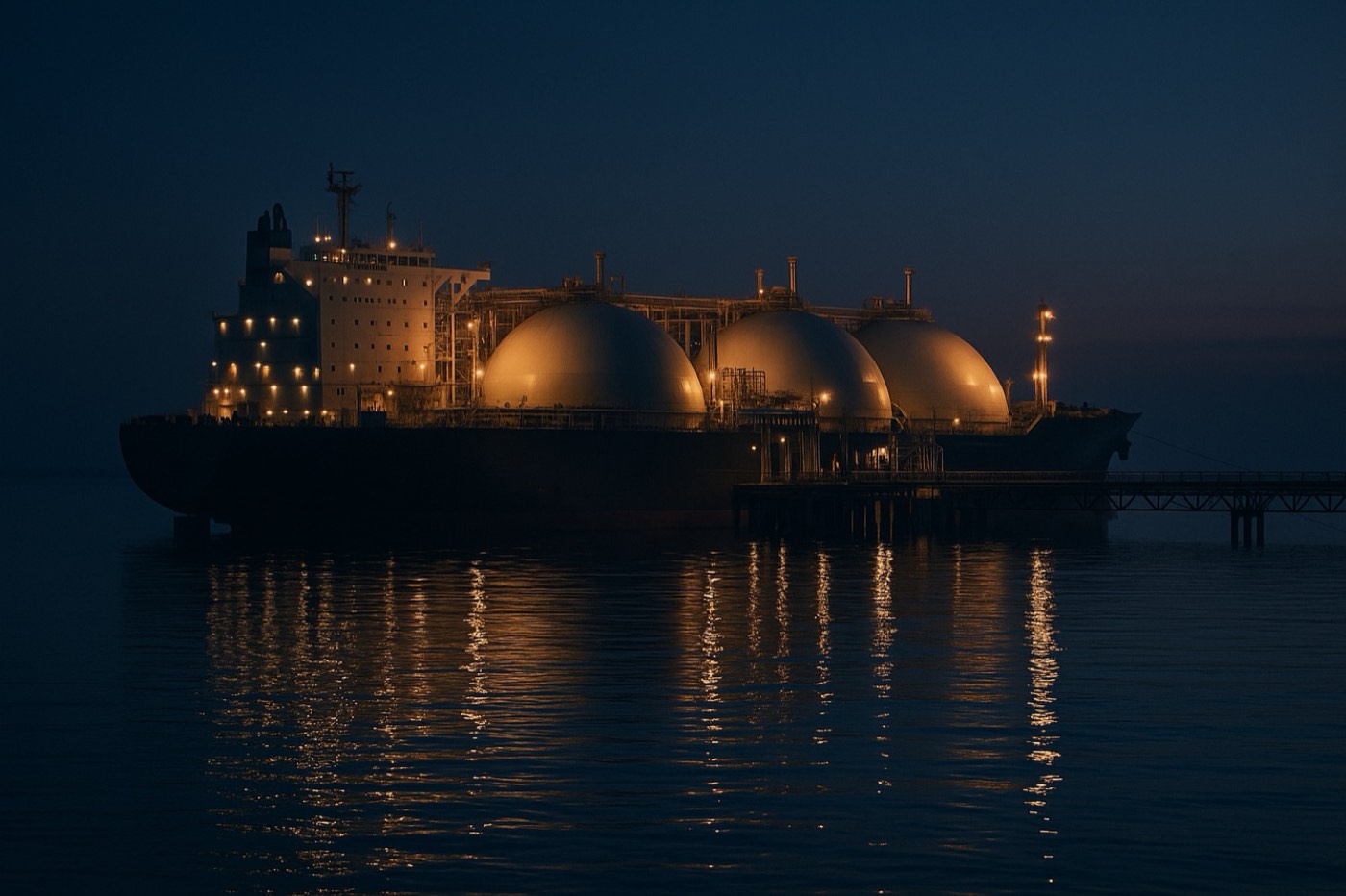
A spherical-tank LNG carrier berthed alongside a terminal jetty at twilight with warm deck lights reflecting across calm dark water.
Illustration generated for Magna.

Regulation and 2030 demand

IMO emissions rules and new liquefaction capacity reshape fleet selection.

Near-term tonnage oversupply coexists with firm long-run gas demand and tightening carbon rules. Structures must clear the 2028 to 2030 regulatory checkpoints.

IMO 2023 GHG Strategy checkpoints and IEA 2030 gas demand horizon

Published regulatory targets and demand projections

Swipe timeline horizontally →

APRIL 2025Net-Zero FrameworkApproved in principleFROM 2028~$100/tonne CO2 from 2028IMO emissions price2030 CHECKPOINTCut 20% to 30% emissions40% intensity · 5-10% zero fuelsIEA 2030: +380 bcm gas · +250 bcm LNGBY / AROUND 2050Net-zero shippingUS & Qatar ~70% new LNG
International Maritime Organization (2023), Global Maritime Forum (2025), IEA Gas 2025.20% to 30%IMO 2023 GHG Strategy cut in total shipping emissions by 2030 against a 2008 baseline, alongside a 40% carbon-intensity cut and 5 to 10% zero or near-zero fuels.Source: International Maritime Organization, 2023. Open the publication ↗~$100/tonne CO2 from 2028IMO emissions price, projected to raise $11 to $13 billion a year for clean fuels.Source: IMO and Global Maritime Forum, 2025. Open the publication ↗+380 bcm by 2030Projected rise in global natural gas demand, 2024 to 2030 (about 1.5% a year).Source: IEA Gas 2025 report. Open the publication ↗+250 bcm by 2030Projected global LNG supply growth by 2030, with the United States and Qatar supplying close to 70% of new liquefaction capacity.Source: IEA Gas 2025 report. Open the publication ↗

Stack specification and mandate sequence

Every tranche carries an explicit source or assumption tag.

Magna separates published vessel benchmarks from deal-specific financing conventions before taking a term sheet to lenders.

Swipe table horizontally to read all columns →

Illustrative LNG carrier capital stack against 2025 newbuild cost of roughly US$200 to 220 million per vessel (Clarksons Research / Ship & Bunker, 2025).
LayerIndicative share of costBasis
Senior debt (bank / ECA)50 to 60% loan-to-valueIllustrative assumption; market convention
Mezzanine trancheSized to the residual gapIllustrative assumption; no public LNG-specific print
Sponsor equityBalanceIllustrative assumption
  1. Step 01

    Fleet and yard benchmarking

    Compare Korean and Chinese delivery slots, propulsion efficiency and IMO 2030 compliance curves.

  2. Step 02

    Charter origination

    Structure term employment with creditworthy cargo owners to insulate debt service from spot troughs.

  3. Step 03

    Debt and mezzanine placement

    Assemble senior bank or ECA facilities plus mezzanine capital sized to contracted net hire.

  4. Step 04

    Closing and ongoing compliance

    Execute hull mortgages, charter assignments and annual emissions-intensity tracking.

Search Magna

Type to search.